C.1Who runs the cemeteries
Canberra Memorial Parks is administered by the Cemeteries and Crematoria Authority, which answers to the ACT Government through the Minister for City and Government Services. Its cemeteries are open from 8 am until sunset, every day of the week. Its three public parks are on Ngunnawal Country.
Burials and interments of ashes take place on any day of the week , though a weekend burial costs extra.
C.2The kinds of grave
Canberra Memorial Parks describes these kinds of burial allotment, and its burial services page names the cemetery where each one is found.
| Allotment | Where | What it is |
|---|---|---|
| Lawn | Woden | A lawn grave marked at its head by a plaque in chrome or bronze, set on a raised concrete block ; the block and a cement base with a vase come with the allotment, and a raised granite block is an upgrade |
| Monumental lawn | Gungahlin | A small headstone on the concrete beam at the head of a lawn grave |
| Plaque beam | Gungahlin and Woden | A large plaque set flush into the exposed aggregate beam at the head of a lawn grave |
| Headstone | Gungahlin and Woden | A full monument, usually granite or marble, covering the whole length of the grave |
| Vault | Gungahlin and Woden | A headstone grave with a sealed, double-depth concrete crypt inside it and a full-length monument above |
| Family estate | Gungahlin | A garden bed with a tree at its centre, framed by four concrete beams in a square ; eight lawn graves sit around the outside of the square, sold in pairs, and these allotments take ashes too |
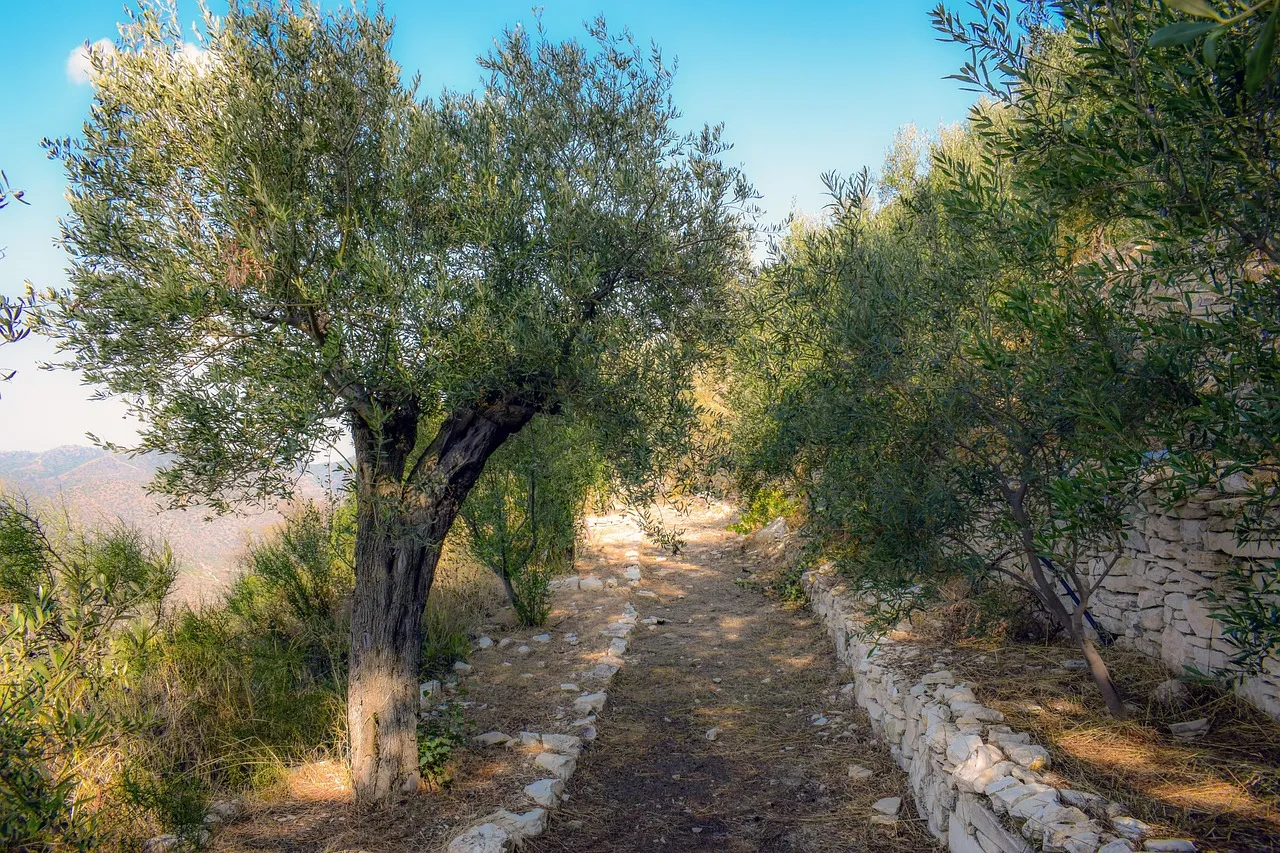
| Olive Grove | Gungahlin | Non-denominational allotments among olive trees, on either side of a long red granite beam with room for a bronze plaque; they take ashes too |
| Natural burial | Gungahlin | No memorial at the grave, which is meant to blend into the bushland around it; cemetery staff can plant a small shrub the family picks from a list of approved natives |
| Christ the Redeemer Mausoleum | Woden | A mausoleum with a chapel area, inside and outside burial crypts (family vaults, double and single crypts) and columbarium niches for ashes |
Canberra Memorial Parks presents natural burial as a choice with a lower environmental impact, the remains left to break down and return to nature.
C.3Sharing a grave
Most allotments can be dug to a double or triple depth, which is why many families share one. The details, from Canberra Memorial Parks’ answers to common questions:
- Two burials. Every grave dug since 1994 is deep enough for two adults. An older grave may be, too; the cemetery’s staff can say. Reopening a grave does not disturb the coffin already in it.
- Three burials. Possible for an extra charge, but the grave has to be dug to that depth at the first burial.
- Ashes in an earth grave. Allowed for a fee, with no limit on how many sets of ashes.
C.4Reserving ahead, and a reservation no longer needed
Every cemetery service can be bought before it is needed, and the site itself can be chosen: the cemetery’s staff show what is available.
Under the Cemeteries and Crematoria Act 2020, a right to burial that has not been exercised ends 60 years after the right is given, and the cemetery’s licensee must give the person who applied for the right a statement to that effect.
A reservation can be handed back to Canberra Memorial Parks for a partial refund. It can also be sold privately, as long as the cemetery’s staff are told and a small transfer fee is paid so its records show the new owner.
C.5Babies and children
Two kinds of garden are set aside for children, at both Gungahlin and Woden. The Babies Rose Garden is for babies born before 20 weeks’ gestation; a family can place a plaque on the rock wall around the garden, and the plaque is included in the cost of the allotment. The Children’s Garden is for children up to and including 12 years old. Its allotments are lawn graves, marked with a small headstone, a plaque, or both, on the concrete beam at the head of the grave.
A family that lost a pregnancy before 20 weeks can also ask Access Canberra for an early pregnancy loss certificate; registering a death in the ACT explains it.
C.6What the Cemeteries and Crematoria Act 2020 says
Behind the cemetery’s own rules sits the ACT’s law. A few of its provisions matter to a family arranging a burial:
- A right to burial
- Anyone may apply to a cemetery’s licensee for a right to bury human remains there. When the person who has died holds a right to burial at that cemetery, the Act says the licensee must accept the application to bury them there.
- Burial somewhere other than a cemetery
- A person may apply to the regulator for permission to bury remains somewhere other than a cemetery, and the regulator may permit it only if satisfied that the burial would not be contrary to the interests of public health.
- Without the usual certificate
- The regulator may approve a burial or cremation without a certification document, but may accept that application only if satisfied that getting one is impracticable.
- Exhumation
- A person may ask the chief health officer to authorise an exhumation.
- A licensed operator
- Operating a cemetery or crematorium without being its licensee is an offence, with a maximum penalty of 100 penalty units, 12 months’ imprisonment, or both.
C.7Visiting a grave
Flowers can be left on a grave. Glass jars and other breakable things are not allowed anywhere in the cemetery.
For ashes rather than a burial, including the gardens and rocks set aside for them, see cremation and ashes in the ACT. If the coroner is involved, the timing of a burial depends on release from the Forensic Medicine Centre, covered in when a death goes to the ACT coroner.
Sources for this page
Every statement on this page comes from one of these official pages, read on 8 October 2026.